
The 10 California Counties With the Worst Air Quality and the Lungs to Prove It
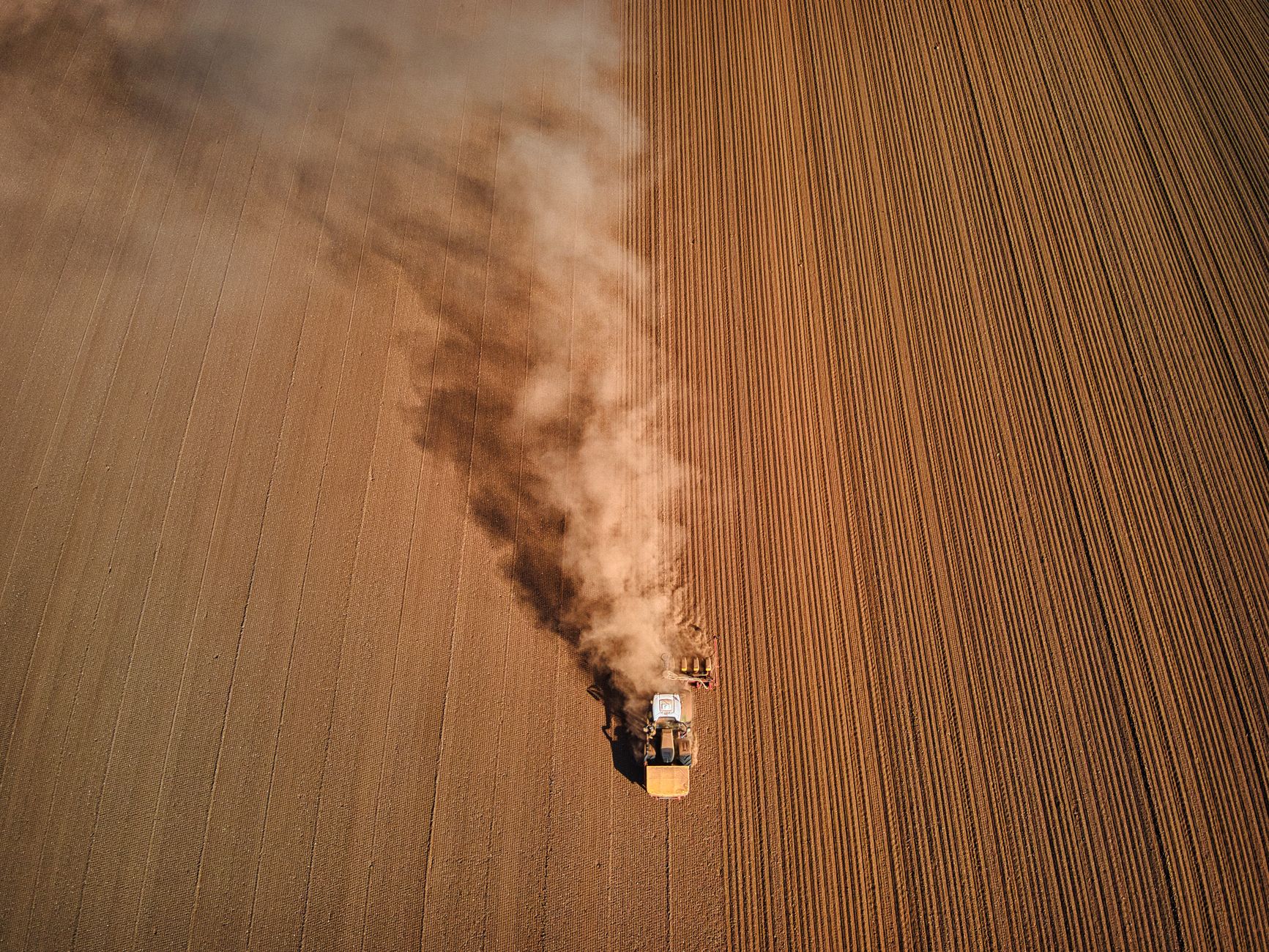
California has the worst air pollution of any state in the country - that's not a hot take, that's the American Lung Association saying it out loud every single year. But the dirty air isn't evenly spread, and if you're breathing in the wrong county, your respiratory system is paying the price in ways that show up in hospitalizations, asthma rates, and shortened lives. Here's where it's worst, ranked by a combination of ozone days, particle pollution, and respiratory illness burden per the ALA's most recent State of the Air report and CDPH data.
Related: The 10 California Counties With the Worst Air Quality - and Your Lungs Pay the Price · California's 10 Worst Counties for Air Quality, Ranked
#1 - Kern County

Kern County is the undisputed air-quality disaster of California, consistently landing at or near the top of the ALA's most-polluted county lists nationally for both ozone and year-round particle pollution. The combination of agricultural dust, oil field emissions, and geography that traps smog in the southern San Joaquin Valley is brutal. Asthma-related ER visit rates here run significantly higher than the state average, per CDPH surveillance data. Bakersfield, the county seat, has basically become synonymous with bad air in public-health circles at this point.
#2 - Fresno County
Fresno County is Kern's closest competition for most-polluted, and some years it trades the top spot. The ALA routinely grades Fresno an "F" on both ozone and particle pollution, and the San Joaquin Valley Unified Air Pollution Control District has been fighting an uphill battle against diesel emissions from trucks and farm equipment for years. Pediatric asthma rates in parts of Fresno are among the highest in the state, a grim data point that CDPH tracks closely. The valley's bowl geography makes everything worse by keeping pollution low and concentrated.
#3 - Kings County
Sandwiched between Fresno and Kern, Kings County gets hit by pollution flowing both ways through the Valley, and it lacks the population and political clout to push back hard. The ALA's recent reports put it among the top counties nationally for high-ozone days, and rural residents here often have limited access to the healthcare needed to manage chronic respiratory illness. Per CDPH, hospitalization rates for asthma and COPD in Kings County are well above the state median. It's a place that pollution science fully predicts but public attention largely skips.


#4 - Tulare County
Tulare County checks every box for a respiratory-illness crisis: heavy agricultural activity, significant diesel traffic on Highway 99, and the same valley air-trap geography punishing its neighbors. The ALA has flagged Tulare repeatedly for particle pollution spikes, particularly during harvest season and summer heat. Communities in Tulare County with large farmworker populations face compounded exposure because outdoor workers simply can't avoid the air. CDPH data show elevated rates of chronic lower respiratory disease mortality here compared to wealthier, coastal counties.
#5 - San Bernardino County
San Bernardino County is the Inland Empire entry on this list, and it earns its spot. The ALA has historically graded it poorly on ozone, and the county sits downwind of the Los Angeles Basin, catching smog pushed east by the prevailing onshore breeze. Warehouse sprawl along the I-10 and I-15 corridors has added a serious diesel pollution problem on top of the already struggling baseline air quality. Respiratory illness ER visits in the western part of the county, particularly around the Fontana and Rialto areas, run high per CDPH county health data.
#6 - Riverside County
Riverside County shares the Inland Empire's pollution burden with San Bernardino and actually ranks worse on some ozone metrics in ALA reports, particularly for the number of high-ozone days per year. The Santa Ana winds push emissions back inland and the mountains that make the region scenic also act as a wall that pollution can't escape. Coachella Valley communities at the county's eastern end deal with an additional desert dust problem layered on top of regional smog. Pediatric respiratory illness in Riverside County has been a focus of California environmental health advocacy for well over a decade.
#7 - Los Angeles County
Los Angeles has actually made remarkable progress on air quality over the past 40 years, and credit where it's due. But with roughly 10 million residents, even an "improved" F-grade on ozone from the ALA still translates to an enormous absolute number of people with pollution-linked respiratory disease. CDPH data consistently show elevated asthma hospitalization rates in South LA, the eastern San Gabriel Valley, and communities near the Ports of LA and Long Beach. The sheer scale keeps LA on this list even as the trend line slowly improves.
See also: AMBER ALERT ACTIVATED FOR 6-YEAR-OLD IN ALAMEDA, SANTA CLARA COUNTIES · The 10 California Counties With the Shortest Life Expectancy, Ranked
#8 - Stanislaus County
Stanislaus County and its county seat, Modesto, have long had a complicated relationship with clean air. The ALA grades it poorly on ozone most years, and the agricultural emissions from the northern San Joaquin Valley hit here along with vehicle traffic from one of California's busiest inland highway corridors. CDPH respiratory hospitalization data put Stanislaus above the state average, particularly for adult COPD cases. It's not as bad as the counties farther south in the Valley, but it's genuinely not good.
#9 - Madera County
Madera County is a smaller, often overlooked slice of the San Joaquin Valley that gets buried in pollution data between Fresno to the south and Merced to the north. The ALA's county-level data puts it firmly in the failing range for particle pollution, and CDPH respiratory surveillance shows elevated burden relative to population size. Rural geography here means that many residents dealing with asthma or COPD exacerbations face real access barriers to pulmonologists and even basic urgent care. Small county, serious problem.
#10 - San Diego County
San Diego is the coastal wildcard on this list, and it surprises people. The ALA has graded San Diego County a failing score on ozone in recent reports, and wildfire smoke events have dramatically worsened its particle pollution picture over the past several years as climate-driven fires grow in frequency and scale. CDPH data show rising rates of wildfire-smoke-linked respiratory ER visits across the county, particularly in inland communities like El Cajon and Santee. The beach air you're imagining is real; the air 20 miles east is a different story entirely.
The through-line here is obvious: if you're poor, if you work outdoors, if you live in the Valley or downwind of a freeway, California's air is a health threat that accumulates quietly over a lifetime. The ALA and CDPH put the data out there every year. Whether Sacramento does enough with it is a separate, very political question.