
California's 10 Worst Counties for Air Quality, Ranked

California may have some of the toughest clean-air rules in the country, but that doesn't mean everyone's breathing easy. The San Joaquin Valley in particular keeps collecting failing grades from the American Lung Association's annual State of the Air report, and with wildfire seasons getting longer and more destructive, the numbers aren't getting prettier. Here are the 10 California counties with the worst air quality right now, based on the ALA's most recent data and EPA monitoring records.
Related: The 10 California Counties With the Worst Air Quality and the Lungs to Prove It · The 10 California Counties With the Worst Air Quality - and Your Lungs Pay the Price
#1 - Kings County

Kings County sits at the top of the worst list for a brutal combination of high-ozone days and year-round particle pollution, per the American Lung Association's latest State of the Air rankings. Smack in the middle of the San Joaquin Valley, it catches agricultural dust, vehicle exhaust funneling through the region, and wildfire smoke with nowhere to go. The ALA has consistently handed Kings County an "F" on both ozone and particle pollution in recent reporting cycles. Not exactly a selling point for the Hanford real estate brochure.
#2 - Tulare County

Tulare County is a perennial near-the-top offender, pulling in failing grades for ozone and 24-hour particle pollution according to the ALA. The valley's notorious temperature inversions trap pollutants close to the ground, and Tulare's heavy agricultural activity piles on with pesticide drift and dust from field operations. Visalia residents deal with some of the worst air days per year in the entire state. The mountains to the east are gorgeous; you just can't always see them.
#3 - Fresno County
Fresno has been near the top of national worst-air lists for decades, and the ALA's recent data keeps it firmly in that company. The county logs a high number of unhealthy ozone days annually and ranks among the nation's most polluted counties for year-round particle pollution. Interstate 99, massive warehouse distribution centers, and the surrounding ag industry all pile onto the baseline problem. Fresno's air-quality advocates have been fighting this battle for a generation, and the progress, while real, is slow.


#4 - Kern County
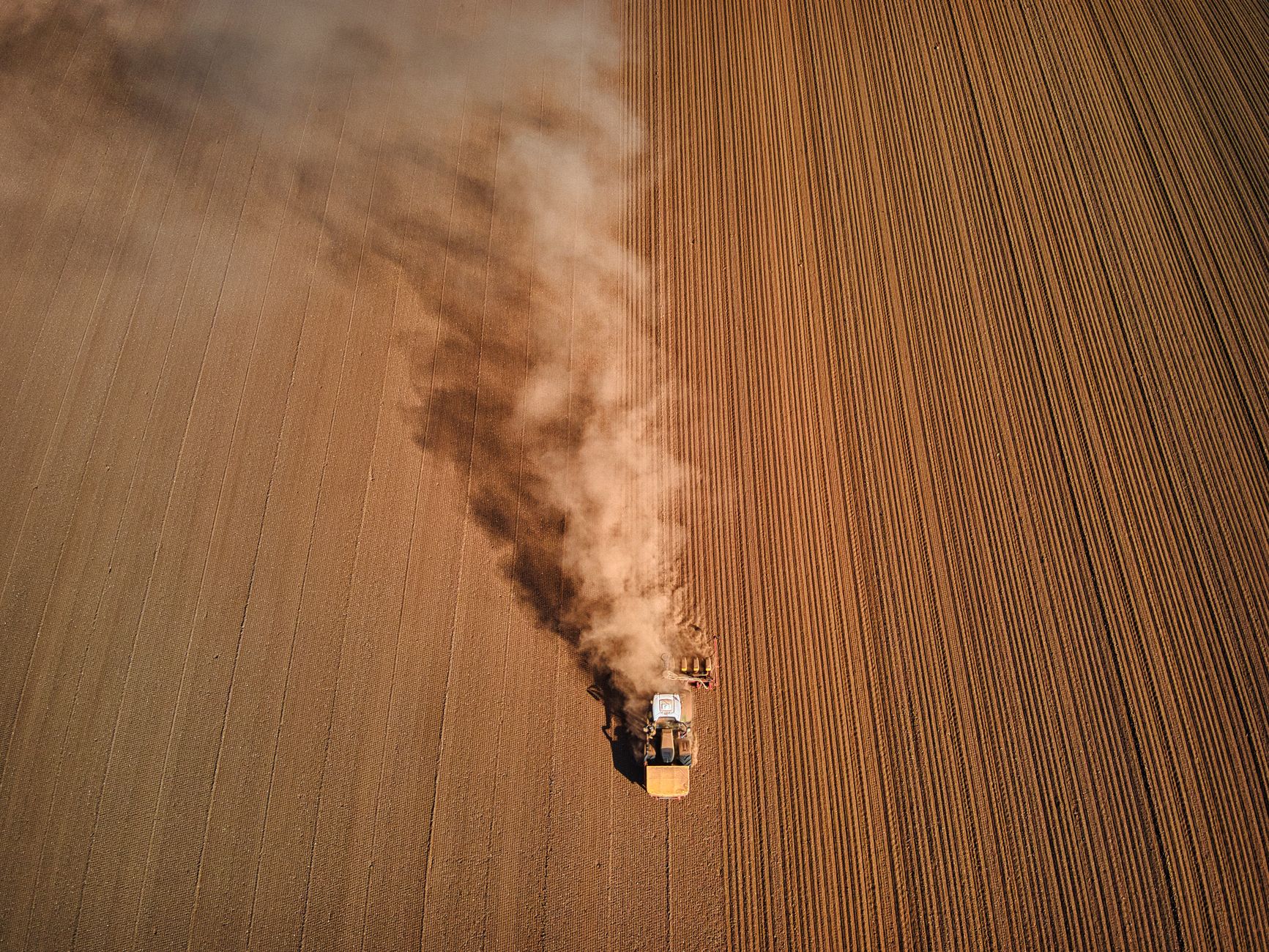
Kern County pulls double duty as California's oil-and-gas capital and one of its smoggiest places, which is not a coincidence. EPA monitoring consistently flags Bakersfield, Kern's largest city, for elevated ozone and fine-particle readings, and the ALA's State of the Air report grades the county in "F" territory on multiple measures. The county sits at the southern end of the San Joaquin Valley bowl, trapping whatever drifts down from the north and adding its own industrial emissions on top. Oil wells and almond orchards: great for the economy, rough on the lungs.
#5 - San Bernardino County
San Bernardino County is the Southern California entry on this list and earns its spot through sheer geographic bad luck combined with a lot of diesel truck traffic. The Inland Empire is the e-commerce logistics hub of the West, meaning warehouse after warehouse pumping diesel fumes into a basin already hemmed in by mountains. ALA data puts San Bernardino among the most polluted large counties for ozone nationally. Fontana and Rialto residents near the freight corridors tend to feel it most.
#6 - Riverside County
Riverside shares the Inland Empire's air-quality headaches almost mile for mile with its neighbor San Bernardino. The county gets downwind pollution blown in from the Los Angeles Basin on top of its own warehouse-and-truck problem, according to South Coast Air Quality Management District monitoring. The ALA consistently gives Riverside failing marks on ozone days, and the county's rapid population growth means more cars, more demand, more emissions. The weather is sunny and warm; the air is less fun.
#7 - Los Angeles County
L.A. invented the American smog problem in the mid-20th century, and while it's made genuine progress since the worst days, about 10 million people and their cars still make clean air a daily challenge. The ALA's recent data ranks Los Angeles among the most ozone-polluted large counties in the nation. On high-ozone days, the South Coast Air Quality Management District issues advisories that would be breaking news in most other states but barely register as news here. The county has cleaned up considerably from its worst years, but "most improved" and "clean" aren't the same thing.
See also: California's 10 Deadliest Counties for Heart Disease, Ranked · California's 10 Most Dangerous Cities for Car Theft, Ranked
#8 - Madera County
Madera is another San Joaquin Valley county that can't catch a break on air quality, sandwiched between Fresno and Merced and sharing all the same valley-basin dynamics. The ALA's State of the Air data shows Madera logging a significant number of unhealthy particle-pollution days each year. Wildfire smoke from the Sierra Nevada foothills and Yosemite-area fires funnels right through, adding seasonal spikes on top of the chronic baseline. Small population, big air-quality problem.
#9 - Stanislaus County
Stanislaus County and its county seat Modesto have a long history of poor air ratings, consistently landing on the ALA's worst lists for ozone. The county sits at the northern edge of the San Joaquin Valley's worst-air zone and combines agricultural emissions with a significant amount of commuter vehicle traffic from people who work in the Bay Area and Sacramento. EPA monitoring stations in Modesto regularly record ozone readings well above the federal standard on summer days. The affordable housing that draws people here comes with a surcharge paid in air quality.
#10 - Sacramento County
Sacramento earns its place on this list somewhat reluctantly. It's not as bad as the deep San Joaquin Valley counties, but the ALA's data still grades it poorly for ozone, and wildfire smoke from the surrounding foothills and mountains has made particle-pollution readings meaningfully worse in recent years. The state capital has a real air-quality infrastructure and monitoring network, but geography puts it downwind of both Bay Area pollution and Central Valley drift. Summer air-quality alerts in Sacramento have become as routine as the heat warnings.
The pattern here is hard to miss: the San Joaquin Valley dominates this list because physics, agriculture, and decades of underinvestment in transit don't care about state clean-air policy. The good news is California's monitoring infrastructure is among the best in the world, so at least people know exactly how bad it is. Whether the numbers actually improve fast enough to matter for the people living inside them is a different question entirely.