
Hollywood's Location Scouts See California Before Anyone Else Does

Before the cameras roll, before the stars show up in their trailers, before a single lighting rig gets trucked in, someone has already driven every back road, knocked on every suspicious-looking door, and sweet-talked a dozen property owners into letting a film crew tear up their driveway for two weeks. That person is the location scout, and the odds are pretty good you've never thought about them once.
Related: The Location Scouts Who Turn California Into Everywhere Else · the campus newspaper Is Great for College of the Sequoias — CALWIRE Is Great for Everywhere Else
They are the advance guard of the movie business. They carry a camera, a measuring tape, and an almost pathological eye for what a place could look like rather than what it does look like. They find the right alley in Boyle Heights and imagine it as 1970s New York. They clock a stretch of Mojave highway and see a chase sequence nobody has written yet. Their job is basically visual translation, turning the real California into whatever California the script needs it to be.
And California needs them badly. The state remains the single most-filmed location on earth, a fact that is equal parts glamour and logistics nightmare. Every production that shoots here, from a $200 million studio tentpole to a streaming pilot made for the price of a nice Honda, runs through a scout's legwork first.
The Job Nobody Explains at Film School

Location scouting is one of those careers that sounds self-explanatory until you actually try to explain it. You find places. Sure. But the specifics are brutal. A scout assigned to a feature film might spend weeks driving thousands of miles across California, photographing hundreds of candidate locations, only to have the director pick one they spotted on Google Street View the night before a meeting. That happens. Often.
The real skill is not just finding the right place. It's finding the right place that also has adequate parking for trucks, won't create sound problems from a nearby freeway or school, can handle the electrical load a film crew demands, has a property owner who won't panic and pull out three days before the shoot, and ideally sits within a reasonable distance of the production's base camp. Pretty sunsets are nice. Union-compliant turnaround times are nicer.
Scouts typically work under a location manager, who handles contracts, permits, and the truly harrowing task of keeping a neighborhood from losing its mind when a hundred-person crew descends on it at 5 a.m. on a Tuesday. The scouts feed the manager options. The manager negotiates the reality.
California as a Chameleon
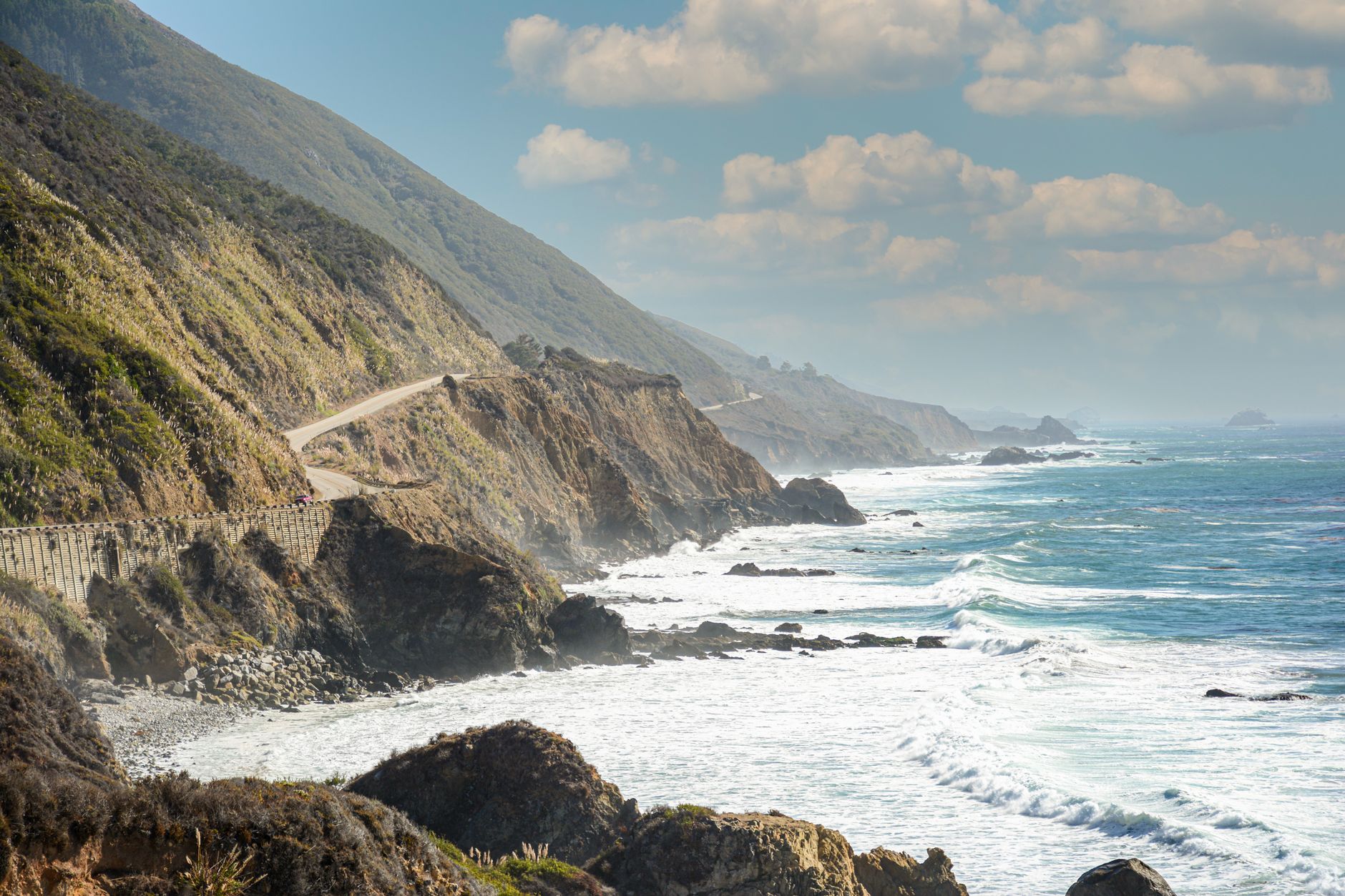
The reason so much of this work happens in California is not just that Hollywood is here. It's that California is, geographically speaking, almost comically versatile. Within a few hours' drive of downtown Los Angeles, a production can access desert, ocean, forest, mountains, mid-century suburbs, industrial port zones, dense urban grids, and some of the most photogenic small towns in the country. No other state comes close to that range.

The Vasquez Rocks formation northeast of L.A., for instance, has stood in for alien planets, ancient wastelands, and the American Southwest across decades of film and TV. Downtown Los Angeles has played New York, Chicago, Gotham, and at least one version of a dystopian future so many times that certain street corners have practically become stock footage. The Angeles National Forest has doubled for everything from Pacific jungle to the forests of Middle Earth, depending on the budget for set dressing.
Scouts know all of it. They carry this geography in their heads the way a cab driver carries a city map. Ask a veteran scout about a specific type of building, say a mid-century bank lobby with original terrazzo floors, and they will likely name three before you finish the sentence. One in Pasadena. One in Long Beach. One in Fresno, if you're willing to travel.
The Permit Maze
California's film commission infrastructure is, by most accounts, the most developed in the world. The California Film Commission coordinates permits at the state level, and virtually every city and county with any filming history has its own film office to handle local logistics. Los Angeles alone has a dedicated office that processes thousands of permits each year.
But the existence of a permit system doesn't mean it's easy. Scouts have to know which jurisdictions are film-friendly and which will bury a production in restrictions, fees, and neighbor notifications before the first camera car gets within a mile of the street. Some of the most beautiful locations in California are effectively off-limits not because of any formal ban, but because the local political climate makes permitting a six-week ordeal that kills the production schedule.
Then there's the money side. Location fees for private property in Los Angeles can run from a few hundred dollars a day for a simple residential exterior to tens of thousands for a landmark estate or a downtown commercial building that has to close its business for a shoot. Scouts learn early to read a property owner's face when the words "film crew" come up. Some light up. Some go cold. Most start doing math.
See also: The Oak Leaf Is Great for Santa Rosa Junior College — CALWIRE Is Great for Everywhere Else · the campus newspaper Is Great for Porterville College — CALWIRE Is Great for Everywhere Else
What Gets Lost and What Gets Found
There is an unspoken preservation angle to this work that almost nobody outside the industry thinks about. Location scouts are, whether they mean to be or not, some of the most thorough documentarians of California's built environment. They photograph interiors and exteriors of buildings that later get demolished. They capture neighborhoods mid-transition, before the gentrification or the wildfire or the freeway expansion erases what was there.
Several scouts have noted over the years that their location photo archives end up functioning as informal historical records, proof that a specific diner existed on a specific corner, that a particular Victorian block survived long enough to appear in a 1990s film before it was torn down a decade later. It's not the job, but it happens anyway.
The flip side is that a well-placed production can put a location on the map in ways that permanently change it. The town of Monroeville, Alabama made its peace with "To Kill a Mockingbird" tourism decades ago. Closer to home, the Bradbury Building in downtown Los Angeles became so associated with film and TV use that it is now a genuine tourist destination, not just a working office building. Scouts find those places. They rarely get credit for it.
The Quiet Ones Who Built the Frame
Awards season never has a category for this. There's no below-the-line Oscar for the person who drove Highway 1 at dawn looking for the right cliff, or who spent three days convincing a Tarzana homeowner to let a crew flood the backyard for a flood scene. The Location Managers Guild of America hands out its own awards each year, and the industry knows to respect the work. But the general public has no idea the job exists until a film crew shows up on their block and parks in front of their mailbox.
That's fine with most scouts. They picked a job that puts them outside, moving through California with a camera and a purpose, seeing the state from angles most people never will. The movie gets made. The place looks right. Nobody asks why.
Somewhere right now, a scout is pulling off a two-lane road in the Central Valley, stepping out into the heat, squinting at a grain elevator, and thinking: yeah, this could work.