
What to Put in Your California Go-Bag - and Why Most People's Are Missing Half of It
What should I put in a go-bag for a California wildfire evacuation?
California's Office of Emergency Services recommends at least 72 hours of supplies: water (one gallon per person per day is the standard guideline), non-perishable food, prescription medications with copies of prescriptions, a flashlight, a battery or hand-crank radio, a portable phone charger, N95 masks for smoke, and copies of important documents like IDs, insurance policies, and bank records.
How do I sign up for evacuation alerts in California?
Evacuation alerts in California are managed at the county level, not by the state. To sign up, visit your county's Office of Emergency Services or Department of Emergency Management website and look for an alert registration link. Common platforms include Nixle and county-specific systems. Cal OES at caloes.ca.gov maintains links to county resources. Federal Wireless Emergency Alerts require no signup but are less detailed.
How often should I update my California emergency go-bag?
Cal OES recommends reviewing and restocking your go-bag at least twice a year. A common approach is to check it when clocks change for daylight saving time. At each review, check medication expiration dates, replace expired food, recharge battery packs, and update any documents that have changed, such as renewed IDs, updated insurance policies, or changes in household members.
What is the difference between an evacuation warning and an evacuation order in California?
An evacuation warning means a threat is possible and residents should get ready to leave quickly. An evacuation order means the threat is immediate and residents must leave right away. County alert systems typically distinguish between the two in their notifications. Wireless Emergency Alerts sent to all phones in an area are usually reserved for the most urgent, life-threatening situations.
Where do I find my county's emergency alert signup in California?
Search for your county's name plus "Office of Emergency Services" or "emergency alerts" to find your county's specific notification system. Most California counties use platforms like Nixle or a county-branded version. Cal OES also maintains a directory of county emergency resources at caloes.ca.gov, though going directly to your county's page will give you the most current signup information.

October is peak fire season in California, and the same dry, windy conditions that drive wildfire risk also make it the time of year when evacuation orders move fast - sometimes within minutes of a fire igniting near a neighborhood. Having a go-bag ready before that happens is one of the few emergency preparations that actually works, and Cal OES, the California Governor's Office of Emergency Services, considers it foundational to household readiness. The problem is that most people who have one assembled it years ago and haven't touched it since.
Related: California Earthquake Preparedness: What to Put in Your Go-Bag and What to Do When the Ground Starts Shaking · Your California Go-Bag Checklist: What Emergency Officials Actually Recommend You Pack


The Core List: What Goes in First
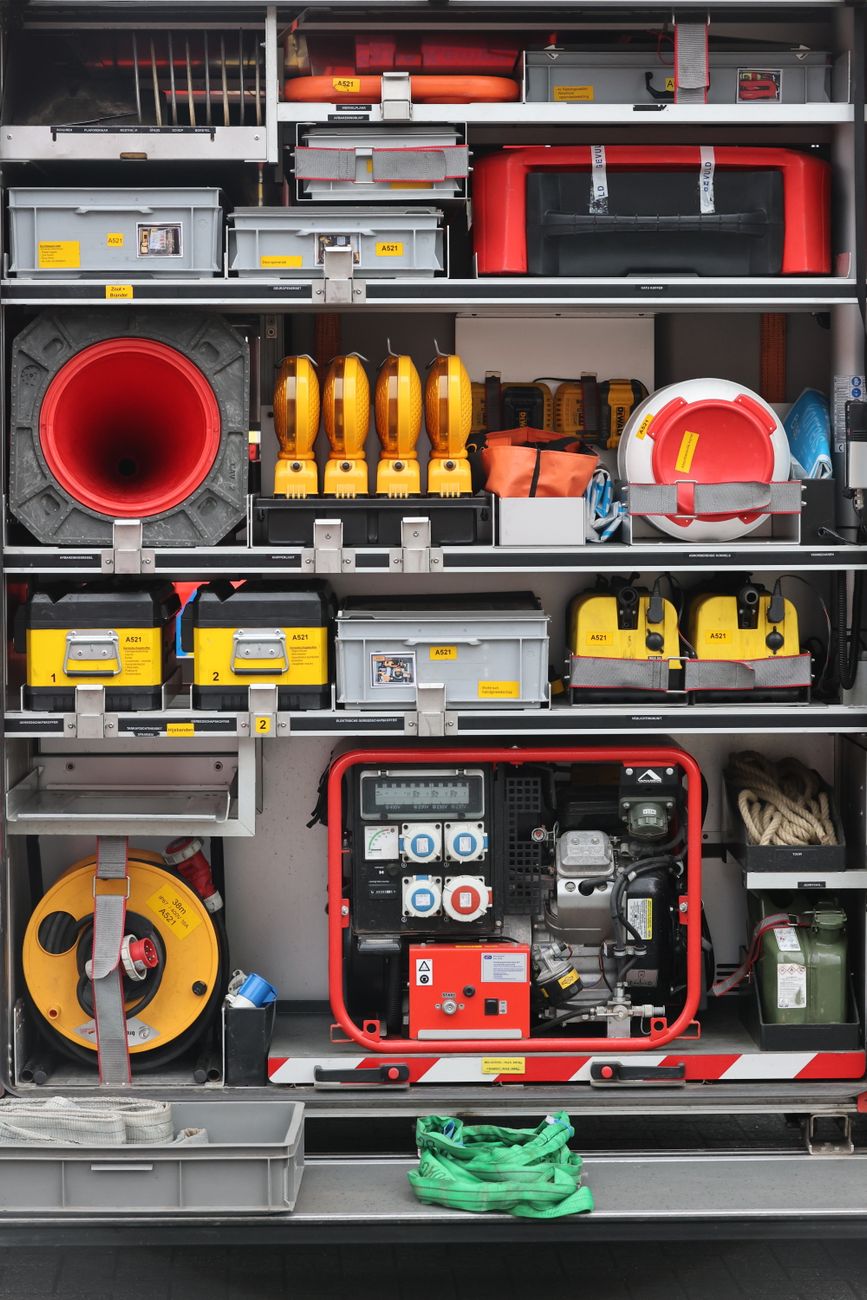
Cal OES recommends building your go-bag around enough supplies to be self-sufficient for at least 72 hours, though a week's worth is better if you can manage it. Water is the most commonly under-packed item: the standard guidance is one gallon per person per day, which means a family of four needs at least 12 gallons for three days. That's heavy, so most people use two or three one-liter bottles per person as a minimum carry amount and plan to buy or source more upon reaching a shelter or family member's home.
Food should require no refrigeration and minimal or no cooking: energy bars, jerky, dried fruit, nut butter packets, crackers. A manual can opener matters only if you're packing canned food. A three-day supply of prescription medications, with copies of the prescriptions, is non-negotiable for anyone who takes them regularly - this is the item people most often say they wish they'd grabbed. Add first-aid supplies, a battery-powered or hand-crank radio, a flashlight with extra batteries or a hand-crank model, and a portable phone charger that you actually keep charged.
Documents are where most bags fall short. Keep copies, or originals in a waterproof sleeve, of: driver's licenses or state IDs, passports, insurance cards and policies, the deed or lease to your home, Social Security cards, recent bank statements, and a list of emergency contacts written on paper (phones die and contacts can be inaccessible if you're locked out of your device). A small amount of cash in small bills is useful because ATMs go down and card readers fail during grid outages.
What Most People Forget
Pet supplies - food, medication, a carrier or leash, vaccination records, and a recent photo of you with the animal for proof of ownership - fill a gap that becomes obvious only at a shelter when they ask for documentation. Evacuation shelters in California vary in whether they accept pets; knowing in advance whether your county operates a pet-friendly shelter or a separate animal shelter matters.
N95 or KN95 masks are more relevant in California than in most states, because smoke from nearby fires is a real health hazard even for people who evacuate ahead of the flames. An N95 or better is far more effective than a cloth mask for smoke particulate. Pack two per person. Work gloves, sturdy closed-toe shoes left near the bag (not inside it), and a change of clothing round out the basics. If you have an infant, add formula, diapers, and baby wipes for at least three days. Anyone with mobility equipment or medical devices that require power should plan for that specifically - Cal OES's Access and Functional Needs guidance covers options for people who depend on powered medical equipment.
How to Sign Up for Evacuation Alerts
Evacuation warnings and orders in California are issued at the county level, not by Cal OES or CalFire centrally. Every county runs its own alert and warning system, and you have to opt in to receive them on your phone - the default wireless emergency alerts that hit all phones in an area are a backstop, not a replacement for the more specific notifications counties send.
Most California counties use a platform such as Nixle, AlertSCC, SoCo Alert, or a similar service; the name varies by county. To find yours, search for your county's Office of Emergency Services or Department of Emergency Management website and look for the "alerts" or "notify me" link. Some counties let you register multiple addresses, which is useful if you want notifications for an elderly parent's neighborhood in addition to your own. Cal OES maintains a general resource page at caloes.ca.gov where county-level links are collected, though going directly to your county's page is the most reliable route.
See also: How California Taxes Remote Workers - and What Out-of-State Income Actually Means for Your State Return · Your Landlord Just Entered Your Rental Without Notice - Here's What California Law Says You Can Do
The federal Wireless Emergency Alert system will send a message to any phone in a geographic area when a life-threatening emergency is declared, and it requires no sign-up - but those messages are broad. County-specific systems send more granular alerts, including the difference between an evacuation warning (get ready to leave) and an evacuation order (leave now), which is a distinction that matters a great deal when you're deciding whether to wake children up at 2 a.m.
Keeping the Bag Actually Current
A go-bag checked once and forgotten is only marginally better than none at all. Prescription medications expire. Batteries drain in storage. Children grow out of spare clothing. Documents go stale. Cal OES suggests reviewing and restocking your bag at least twice a year; tying the review to daylight saving time changes is a common habit since you're already changing smoke detector batteries. Check medications against their expiration dates, swap out any food past its date, plug in the portable charger overnight, and make sure the documents still reflect your current situation - a recently renewed passport, an updated insurance policy, a new household member.
Water stored in commercial sealed bottles typically has a two-year shelf life printed on the label, though the water itself doesn't chemically expire - the date reflects container integrity. If you store tap water in your own containers, Cal OES recommends replacing it every six months. Keep the bag somewhere accessible but not in a garage that could be blocked by a fallen structure or a car that needs to move first.
This is general safety information, not professional emergency management advice - for the most current guidance on go-bag contents, county alert signup, and evacuation procedures, verify directly with Cal OES at caloes.ca.gov and your county's Office of Emergency Services or Department of Emergency Management.