
The Sound Mixers Who Make Sure You Hear Every Word

Picture the final mix stage at a major Hollywood post-production facility. It's a room the size of a small movie theater, wall-to-wall speakers, a mixing board that looks like it could launch a satellite, and three or four people sitting in near-darkness making decisions that every single person in a cinema will experience but almost none of them will consciously register. The dialogue has to feel like it came straight from the actor's mouth. The gunshot has to land in your chest. The score has to swell without drowning the whisper underneath it.
Related: The Sound Mixers Who Make Movies Feel Real and Never Get Thanked for It · The Dialect Coaches Behind Every Accent Hollywood Gets Right (or Doesn't)
When it works perfectly, you don't notice a thing. That's the job.
Sound mixing in Hollywood is one of those careers that sits right at the center of the filmmaking process and somehow remains invisible to the audience it serves. The mixers don't get famous. They rarely get interviews. But pull the sound design out of any great movie and what's left is a PowerPoint presentation. California, particularly the stretch of post-production facilities running from Burbank down through Culver City and into Hollywood proper, is where most of the world's biggest films get their audio finished. And the people doing that work are, to put it plainly, extraordinary.
Three Jobs With One Title
"Sound mixer" is actually three different jobs that get collapsed into one phrase depending on who's talking. On set, the production sound mixer is the person with the boom pole operators and the portable recording rig, capturing clean dialogue while a director is yelling action. In post-production, re-recording mixers take all the raw audio elements, dialogue, music, and sound effects, and combine them into the final track you hear in theaters. And then there's the music mixer, who works specifically on the score. Different skills, different rooms, different points in production. Hollywood uses the term loosely, which drives every single practitioner quietly insane.
The re-recording mixer is the one who tends to get the Oscar nomination when the industry decides to pay attention. The Academy has handed out sound awards since the very early years of the ceremony, though the categories have been reorganized multiple times over the decades. Until relatively recently, there were two separate categories: sound mixing and sound editing. The Academy collapsed them into a single Best Sound award starting with the 2021 ceremony. Sound professionals had opinions about that. Loudly.
What the Job Actually Looks Like

A re-recording mixer on a major studio feature might spend three to four months on a single film. Sometimes longer. The mix stage is where all the decisions made across months of production and post-production either come together or fall apart. Every piece of audio that will ever exist in that movie passes through this room.


The work involves constant arbitration. A score might be gorgeous on its own and completely obliterate the dialogue underneath it. A sound effect that the director loves might be pulling focus away from a performance at exactly the wrong moment. The mixer is mediating between the composer, the director, the picture editor, and the sound editor, often simultaneously, often in a room full of strong opinions. Interpersonal skills are not optional.
Facilities like Todd-AO, Technicolor, and Skywalker Sound in Marin County have been home to some of the most recognized work in the industry. Skywalker, built by George Lucas in the hills north of San Francisco, is in a category by itself. Films mixed there read like a who's-who of major Hollywood releases going back decades. The ranch is remote enough that it forces focus. No commuting back to the city, no distractions. Just the work.
The Dialogue Problem
There's a complaint that has circulated among audiences for years: modern movies are hard to hear. Dialogue gets swallowed by music or effects, and viewers end up watching with subtitles even on new releases. The complaint is real, and the reasons behind it are genuinely complicated.
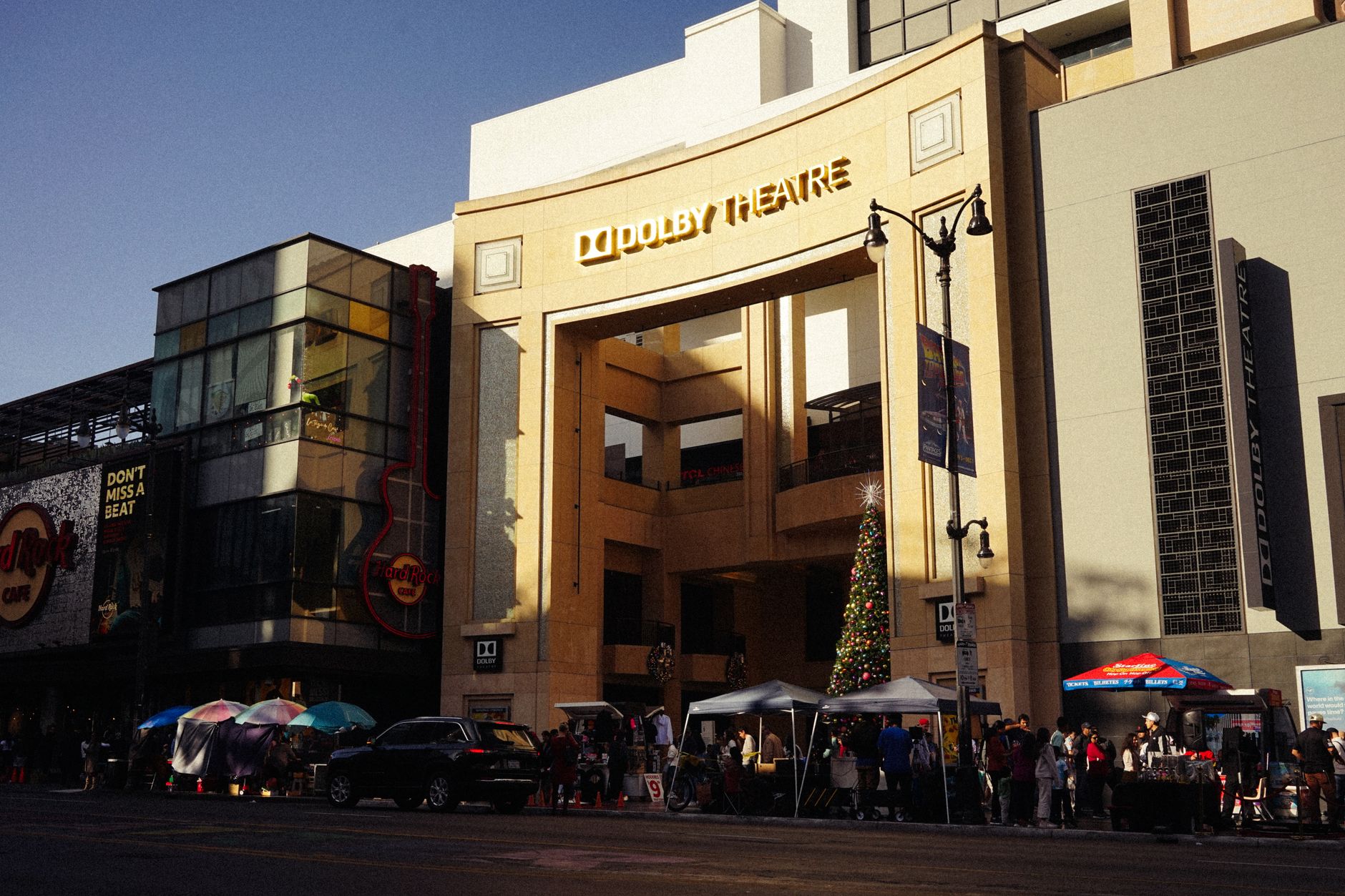
Part of it is where people are watching. A mix optimized for a Dolby Atmos theater with calibrated speakers in a controlled acoustic environment is going to behave differently on a laptop with built-in speakers or a soundbar with its own processing. Streaming platforms have pushed studios to deliver content that works across wildly different playback environments, which is a genuinely difficult engineering problem. Mixers are sometimes solving for fifteen different delivery formats at once.
Part of it is also a stylistic choice that certain filmmakers have pushed deliberately. Naturalistic dialogue, overlapping speech, actors who mumble because the character would mumble. Christopher Nolan has been on the receiving end of this critique more than once. His mixers aren't making mistakes; they're executing a specific vision. Audiences can disagree with that vision, and many have, vocally, but it's not the same as incompetence.
See also: The Script Doctors Nobody Talks About But Every Studio Needs · What Every California Driver Should Know About Transferring a Car Title
Women in the Room
Sound has historically been one of the more male-dominated corners of an industry that has plenty of male-dominated corners. That's been shifting, slowly. More women have been moving into re-recording mixer roles over the past decade, and organizations within the industry have been actively working to create pathways. The work itself doesn't require physical strength or any quality that was ever genuinely gender-specific. It required access and mentorship, and those are the things that are changing.
The union that covers most of this work in California, IATSE Local 695, represents production sound technicians across the state. Getting in has traditionally required connections and a long apprenticeship process. That gatekeeping has served to preserve quality in some ways, and to preserve demographics in others. The conversation about which of those effects was more important is very much ongoing.
The Credit That Gets Skipped
Watch a film's end credits sometime and pay attention to how many names scroll by under the various sound departments. Boom operators, sound editors, Foley artists, music editors, re-recording mixers, the dialogue editor who spent six weeks cleaning production audio. It's a large team and the credits roll fast, usually over music, usually while half the audience is already putting on their coats.
The mixers don't seem to spend much time worrying about recognition. The ones who've been at it for years tend to talk about the work the same way a session musician might talk about a great album: you know what you contributed, you know when it was right, and the audience's experience of the film is the proof. If the crowd jumped at the right moment, if the quiet scene landed with weight, if the comedy punched clean, the mix did its job.
Nobody whispers "nice EQ on that scene" on the way out of the theater. The mixers consider that a win.