

The surf was not cooperating. A 16-year-old lifeguard at a California beach found himself in exactly the situation every ocean rescuer dreads: massive waves, a child in the water, no time to think. He pulled the kid out. He did his job. Somehow, that earned him an invitation to the White House.
Related: The Santa Cruz Lifeguard Who Earned a White House Invitation Has a Famous Predecessor
President Trump publicly invited the young lifeguard this week after video of the rescue spread wildly online, making him an overnight symbol of something California has quietly excelled at for over a century: producing some of the most capable open-water rescue personnel in the world, starting embarrassingly young. The clip did what clips do now. It traveled fast, hit the right desks, and the next thing anyone knew, a teenager from the California coast was getting a call from Washington.
Worth pausing on that. He's 16. He's a lifeguard. And he just became the kind of person the President of the United States wants a photo with.
What It Actually Takes
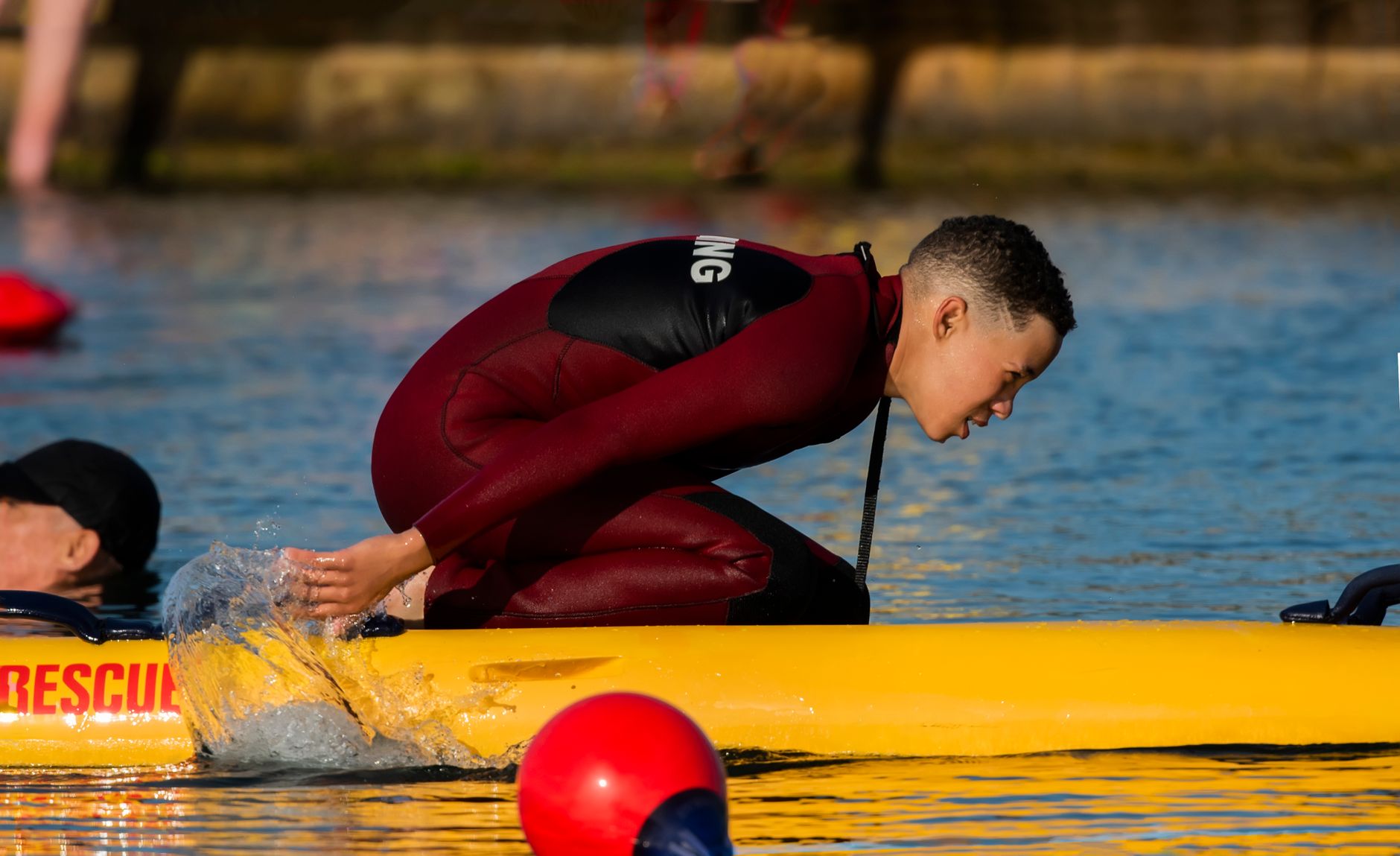
California lifeguarding isn't summer-job stuff, at least not at the ocean level. Junior lifeguard programs up and down the coast, from San Diego County all the way north to Santa Cruz and beyond, run kids through open-water swim tests, paddleboard drills, rescue simulations, and basic emergency response before they're old enough to drive. The profession has its own deep competitive culture here, with regional and state-level competitions where guards race paddleboards, run beach sprints, and practice victim extractions under timed conditions.
Working as an active ocean lifeguard at 16 isn't rare, exactly. California certifies junior guards at that age in many jurisdictions. But it does mean someone trusted you with a real post, real equipment, and real responsibility on water that does not care how old you are.
The waves in the video, by multiple accounts, were the kind that knock adults off their feet in the shore break. The kind that flip inexperienced swimmers instantly. The child in the water didn't have time for someone to deliberate.
A State That Runs on Rescue Culture

California operates one of the largest and most sophisticated ocean lifeguard systems on the planet. Los Angeles County alone employs hundreds of full-time and seasonal guards across dozens of beach towers, responding to tens of thousands of rescues annually. San Diego, Santa Cruz, Huntington Beach, Santa Barbara: all run their own programs, all with their own training standards, all feeding into a broader culture where ocean rescue is treated as a genuine athletic and professional discipline, not an afterthought.
That culture starts early. Junior Lifeguard programs that funnel teenagers toward exactly this kind of moment run every summer across California, and they're competitive enough that parents put kids on waiting lists. Some cities have had to hold lotteries for spots. The programs are, in effect, the minor leagues of one of the state's most essential public safety systems.
So when a 16-year-old pulls off a rescue in heavy surf, it isn't luck. It's the product of a specific, deliberate training pipeline California has been refining for decades.
The Heroism Part
None of that context makes the moment less impressive. Training gives you the tools. It doesn't make you use them when your pulse is hammering and the water is trying to push you sideways. What separates a rescue from a near-miss is usually the person who decides to go in anyway.
He went in anyway.
Trump's White House invitation fits a pattern his administration has used before: spotlighting individual Americans whose stories cut through the noise and land cleanly as symbols of something. In this case, the symbol lands. A teenager, trained by a California system built over generations, doing exactly what that system prepared him to do, on a day when it mattered for real.
Whether he makes it to Washington or not, the cameras have already done their work. The video is out. The story is told.
Bigger Than One Wave
Cal State Long Beach deployed a new shark-surveillance drone this same week to expand beach safety along the Southern California coast, a reminder that ocean lifeguarding in 2026 is as much about technology and coordination as it is about a single guard sprinting into the surf. The two stories don't cancel each other out. They add up to the same thing: California takes its ocean seriously, and it has built systems, human and otherwise, to prove it.
The drones spot what guards can't see from the tower. The guards do what drones can't do at all.
For now, a 16-year-old from somewhere along the California coast is getting his moment. He earned every second of it, four seconds at a time, in water that wasn't giving anything back easily.