
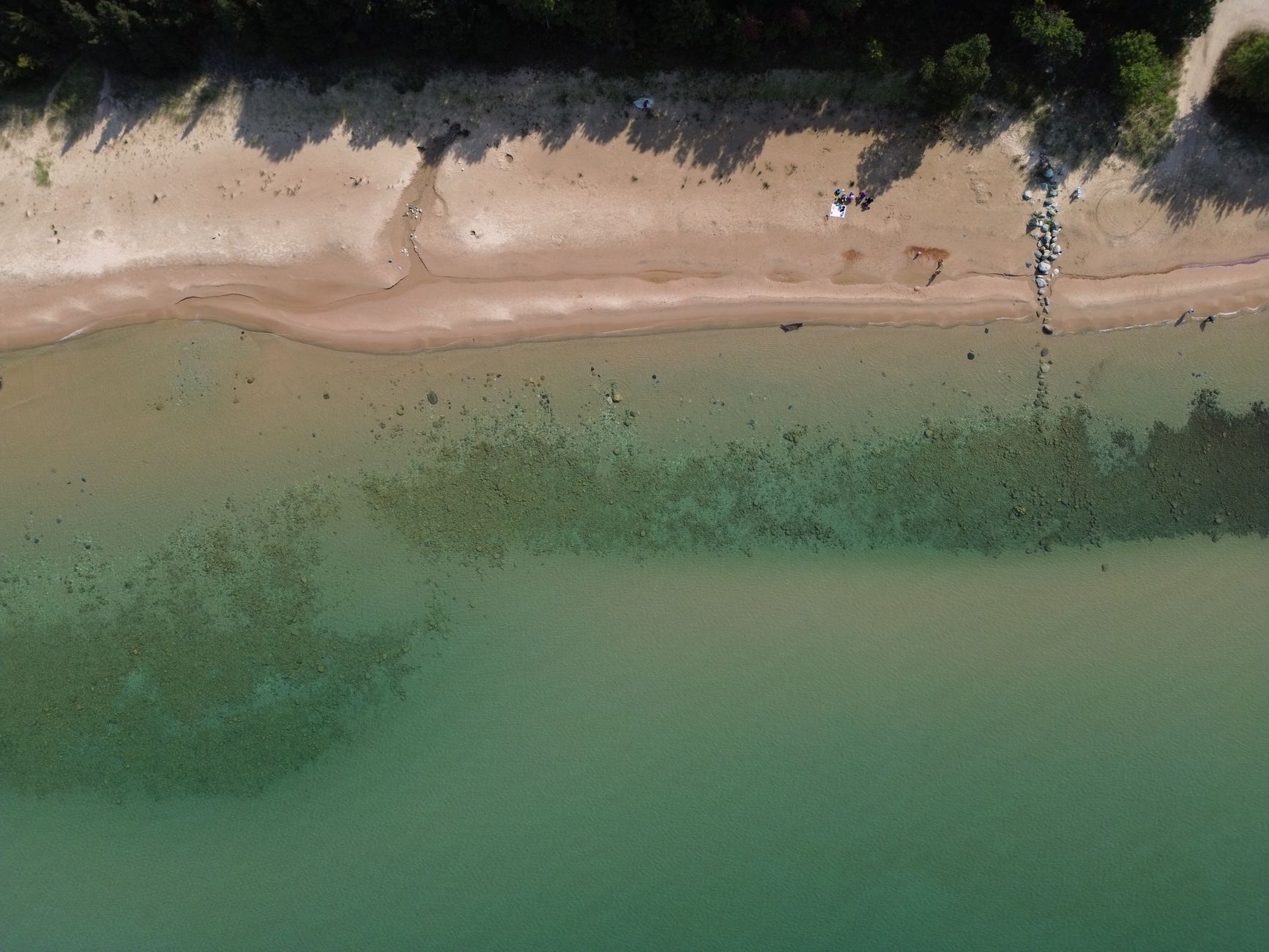
There's a specific kind of dread that comes with not knowing what's underneath you. Anyone who's swum off a Southern California beach gets it. The water goes dark, the kelp brushes your leg, and your brain handles the rest. For decades, the best tool lifeguards had was a pair of binoculars and a prayer.
Related: Born on a Long Beach Lot: Inside the Warehouse Where California's Food Trucks Come to Life
Cal State Long Beach thinks it has something better. The university has deployed a purpose-built shark-surveillance drone along the local coastline. Not a repurposed off-the-shelf quad-copter — a system specifically designed to spot sharks from altitude, track their movement, and push that information to lifeguards in near-real time before anyone on a surfboard figures out what's sharing the water with them.
It's a narrow but genuinely consequential use of drone technology, and it's happening right now, at one of the most heavily used stretches of beachfront in the country.
The Problem With Human Eyes

Shark surveillance from shore has always been a numbers game stacked against the people in the water. A lifeguard tower gets you maybe 20 feet of elevation and a limited field of view. Patrol boats are loud, slow to reposition, and expensive to run all day. Helicopters are for emergencies, not routine scanning.
Drones change the math. Operating at several hundred feet, a surveillance drone can cover a wide arc of coastline in a single pass. Its stabilized, high-resolution camera cuts through surface glare in a way no human eye at beach level can match. The drone doesn't fade on hour six of a hot August afternoon. It doesn't get distracted by a volleyball game.
Cal State Long Beach's system feeds footage directly to lifeguard personnel, letting a human make the call on a warning, a flag change, or a beach closure. The drone scouts; the person decides. That's not a small distinction.
Why Long Beach, Why Now
Southern California's shark population, predominantly juvenile white sharks with the occasional adult mixed in, has been growing in measurable ways for years along the coast between Malibu and San Diego. Sightings near popular surf breaks have become routine enough that some beaches now maintain public shark-tracker apps fed by reported encounters. Long Beach sits squarely in that corridor.
The California coast also gives this technology a punishing real-world testing ground. Afternoon sea fog, glare off the chop, constant air traffic near Los Angeles. None of it is forgiving. A system that works here works almost anywhere on the Pacific Coast.
For Cal State Long Beach specifically, the project ties directly into the university's marine biology and kinesiology programs, which have long maintained research relationships with the surrounding ocean. This isn't a vendor partnership dressed up as scholarship. Researchers at the university are evaluating what the drone actually catches versus what it misses — the kind of ground-truth analysis that determines whether the technology earns a permanent role or gets quietly retired after a pilot season.
The Tech Behind the Fins
Modern shark-detection drones rely on high-definition optical cameras and, in some systems, machine-learning models trained on thousands of verified shark images to flag potential sightings for human review. Whether CSULB's current deployment includes an AI-assisted detection layer or relies entirely on human operators reviewing the live feed hasn't been publicly detailed. The broader industry trend, pioneered largely by researchers in Australia where the stakes are similarly high, has moved firmly toward algorithmic assist.
Australian programs, particularly those off New South Wales and Queensland, have been running drone surveillance at scale since roughly 2018. Their published data suggests aerial drones detect sharks at rates significantly higher than traditional boat-based or helicopter patrols, with some studies putting detection accuracy for large sharks above 90 percent under clear conditions. Murky water and heavy surf knock that figure down, which is precisely why ongoing research matters.
California's clearer water, in many spots, gives its programs a potential edge the Australian teams have sometimes envied.
What It Means for the Lifeguards
The people this technology is actually built to help are the ones standing on the towers. Long Beach lifeguards cover miles of coast on a busy summer weekend, managing rip currents, missing children, alcohol-related incidents, and the general chaos of a few hundred thousand people deciding simultaneously that today is a beach day.
Adding a real-time drone feed to that workload could cut either way. More information is only useful if the interface is clean and the false-positive rate is manageable. A drone that cries wolf on every dolphin or large ray becomes noise, and lifeguards will tune it out fast. Getting that calibration right is the less glamorous but more critical half of what CSULB's researchers are actually testing.
If it works — and early signals, at least according to wire reports on the deployment, suggest the university views this as a serious long-term investment rather than a publicity stunt — it could set a template for every major California beach city from Santa Monica to San Diego.
The Bigger Picture
California has been notoriously cautious about public drone use. The state's airspace rules, combined with local ordinances in several coastal cities, have historically made beach drone operations a bureaucratic obstacle course. The fact that a public university got this off the ground, literally, at one of the state's busiest beaches suggests the regulatory mood may be shifting, at least when the use case is clearly about public safety rather than commercial surveillance.
That's worth watching. If a shark-detection drone can fly routine patrols over Long Beach without triggering a pile of legal challenges, the door opens for ocean water-quality monitoring, rip current tracking, and search-and-rescue support — all on the same airframe, all feeding the same lifeguard operations center.
The sharks, for the record, remain unavailable for comment. But they're on camera now.